The long fight for housing freedom
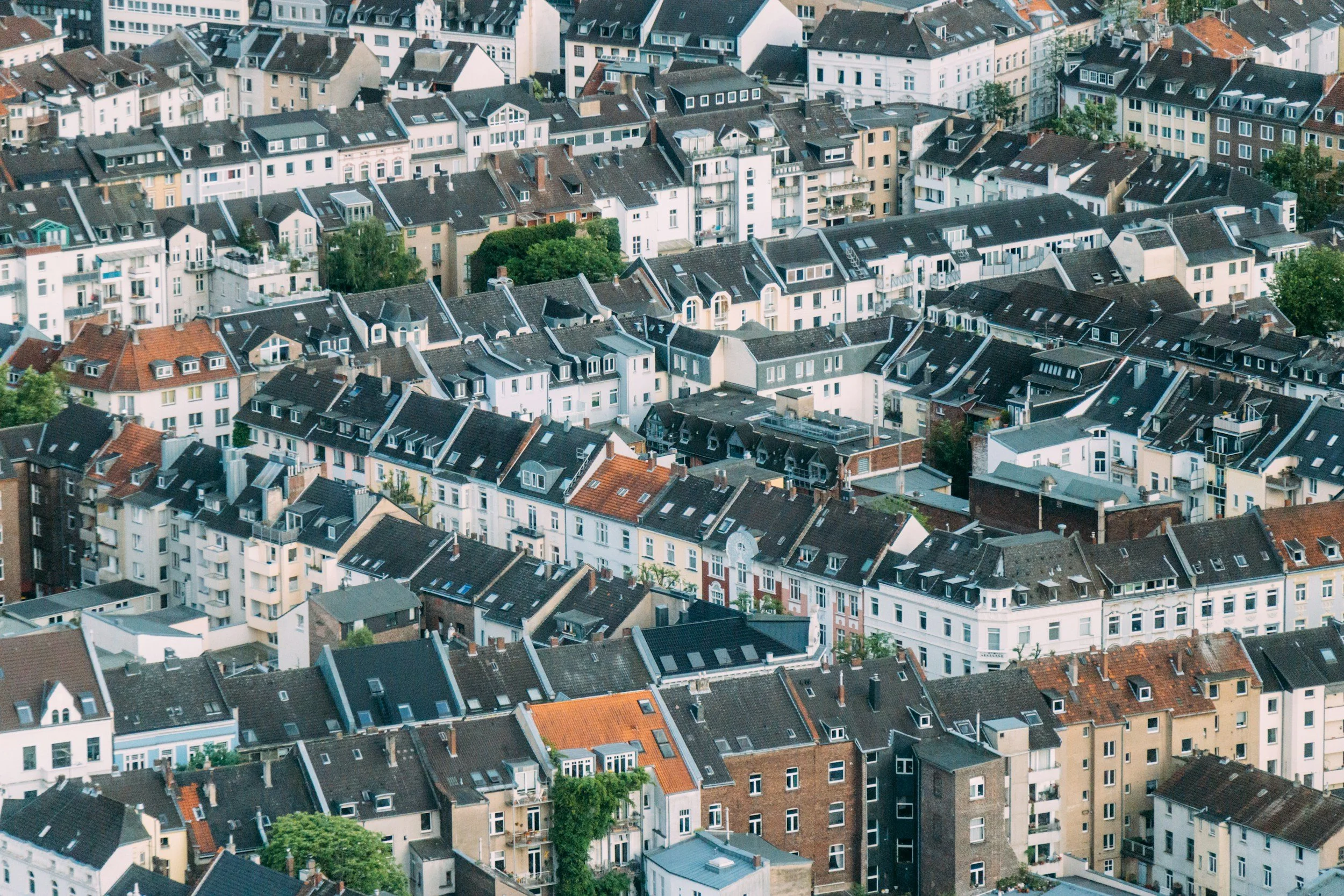
Dense housing can be appealing, if not to everyone
Just two months ago I was walking up and down streets in my part of Cambridge, ringing doorbells, knocking on doors, and either talking to whoever answered or leaving literature in support of pro-housing candidates in our city council election.
This certainly isn’t a normal activity for me. I’m not a natural talker-to-strangers. And a fair number of people did answer their doors. Small children were particularly delighted at the arrival of an unexpected visitor.
But I felt that was an important issue. Cambridge, and Metro Boston as a whole, have a serious shortfall of housing, the result of decades of residential housing restrictions. Prices and rents are high. Businesses are suffering because suitable employees can’t afford to live here. Younger people are moving elsewhere, ensuring that this region will become increasingly irrelevant, economically and politically.
Fortunately, it was mostly friendly people who answered their door, many of them relatively new to the area, and interested in supporting us on this issue. I got to learn more about both my neighborhood and a couple of others by going up and down every street, few of them on the way to anything.
Some people aren’t ready for housing freedom
Not everyone is in favor of making it easier to build new houses, though a surprising number of people are. There has been a real change on this issue. And I get an instinctive NIMBYism. I think that’s pretty much the default position, one that you have to somewhat think your way out of.
One thing that pleased me was the low quality of the literature and website sent out by what I would call the anti-abundance group, which I will not name. It supports all sorts of good stuff like trees and families, and implies that anyone who wants to build places for families to live is a greedy monster who wants to cast a shadow over the land. Apocalyptic and inaccurate rhetoric characterizes anti-housing organizations.
Cambridge recently announced that it has hit a milestone of 30 percent tree canopy, a steady increase since 2019, so many of us are also in favor of trees. Which, I gather, “provide shade”, while Luxury Housing always “casts shadows”. “Luxury” is the popular pejorative adjective for any market-rate units, whether for families or for individuals.
It seems that “affordable” and “luxury” are your only two choices—and given restrictions developers encounter when trying to build a multifamily building, that might well be the case. Affordable units (that is, income-restricted housing supported by a variety of public and private subsidies) and units aimed at people with higher-than-average incomes (who can afford to pay a premium) may be the only two ways for a developer to make a profit.
But an increasing number of people are
It’s tempting to argue with people who want to continue to restrict housing. I spoke at a community meeting recently. It was about a proposal to upzone the northern stretch of Massachusetts Avenue in Cambridge, very near where I live. I lived in this area on and off during the 1980s, then finally bought a condo and then a house here from the 1990s. I like my area, but this stretch of the avenue has a real edge-of-town feel, somewhat dead-feeling, without a lot of vitality.
The proposal would allow for much taller buildings, with bonuses for street-level retail. I’d be happy to have more neighbors, and more local restaurants, stores, and services that could serve us all. The proposal has been contentious, but not unusually so, given how things like this usually go. The canvassing I did was in service of support pro-housing candidates for the City Council, and these candidates won a strong majority, so there is strong support in the city for proposals of this sort.
It was my first time speaking at such a meeting, but clearly many people had been speaking on the issue for quite awhile, and had polished speaking styles. Someone told a story about how his father was visiting from Florida and was flabbergasted at the idea that people would build more housing while the area was already crowded.
I found the idea of someone from Florida being cited to limit building in Massachusetts weird and ridiculous. Does he have an irrelevant anecdote every time he speaks? But there is no real upside to arguing with people or scoring cheap points, satisfying as that might feel. I was there in person to show that the anti-housing position is not representative of the general mood of Cambridge on this issue, and tolerated the contemptuous snorting of those who did not agree with me. This type of opposition seems to bring out unpleasant personality traits in people who, I suspect, are generally decent folks. It’s like driving in that way: thwarted entitlement leads to entitled anger.
All of the pro-housing people I’ve worked with are patient and courteous, which is really the only way to bring people on the fence over to your side. NIMBYism is everyone’s default position, after all. And some of them have been bullied by their neighbors and are trying to maintain good relations.
Plus I went out for a beer with some fellow pro-housing volunteers, all of them much younger than I am and then rode my bike home, all benefits of living in a city like Cambridge.
Lifting long-term restrictions can result in rapid changes.
Housing construction has been restricted for so long that a liberation will result in a large number of building proposals, the same way a century of preventing minor forest fires has contributed to recent gigantic forest fires.
For some it will feel apocalyptic, but I suspect many of is will find it disruptive. Familiar structures will vanish. A disturbing number of new, larger buildings will appear in a streetscape that has changed little in decades. No doubt I will find some of them unattractive.
Of course, the obstacle course to building is so long, even with these zoning changes, that nothing will happen soon. But we have to face the fact that we’ve worked the pressure build to an almost intolerable level. It will take a long time to get to the amount of housing our city and region really require.