Reading the history of 19th-century France to understand 21st-century America
Every age must think its own politics the worst and most ridiculous that has ever been—except for those deeply committed people who think that they are the edge of the abyss, and the next bad decision will send everyone hurtling downward.
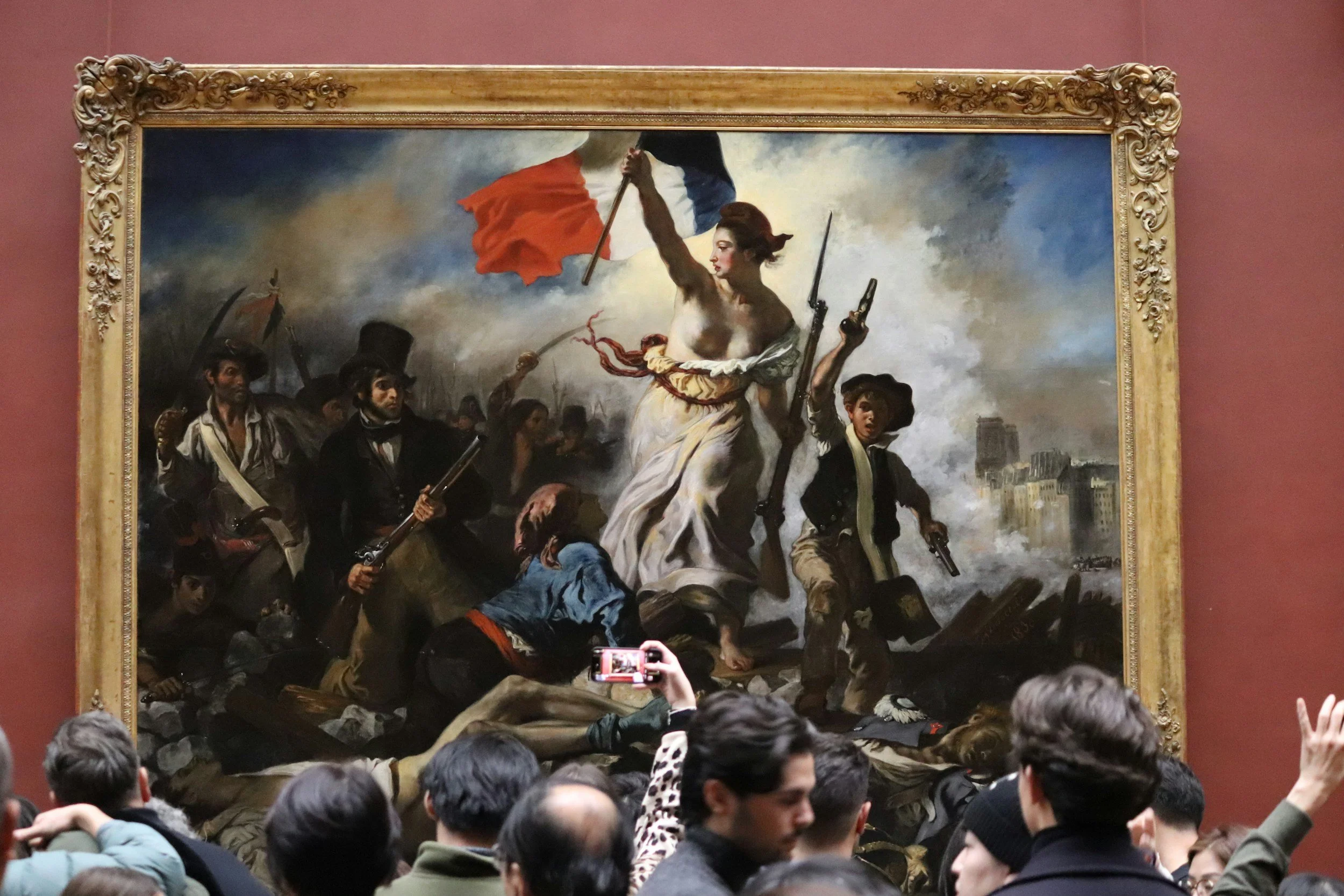
Riot to revolution to art to culture to kitsch
And, who knows? That may be true this time. There are moments when the friction of the historical process is less, when a decision this way or that can set things off in a direction that is difficult to come back from. Times of revolution don’t necessarily reveal themselves in the form of mobs in the streets or regimes that explicitly define themselves as a new order.
I’ve recently been interested in the politics and culture of 19th-century France, which seemed to be in a permanent state of crisis. It suffered revolutions, insurrections, coups, invasions, and conspiracies, along with all the changes that industrialization brought.
But what is interesting about the era is its very familiar sense of paranoia.
Reading the history of 19th-century France
An excellent book summarizing the characteristics and events of the era is France 1815-1914, by Robert Tombs, which goes into depth about the underlying groups and forces in France over that century. The book is structured into three thematic sections (Obessions, Power, and Identities) followed by two chronological sections (The Era of Revolutions, 1814-1871 and The Government That Divides Us Least, 1871-1914). Each of these section sis divided into several chapters.
What particularly struck me was the beginning of the chapter called “Paranoia”, in Obsessions, which covers conspiracies of Freemasons, Protestants, Jews, and Jesuits, among others:
We cannot understand the obsessions of French political culture without taking account of the fantastic. Analysis in terms of interest and calculation, capital and labour, or profit and loss leaves much of the iceberg hidden. Major political battles were fought against partly imaginary antagonists, and were based on beliefs about the workings of society and politics that were at best travesties of reality. Nowhere can this be better seen than in the paranoid obsession with conspiracies, a lurid world of myth inhabited not only by cranks and simpletons, but by serious and influential thinkers and statesmen.
Conspiracy theories perpetuated “the language of civil war” in politics. They portrayed not a society pluralistically divided by legitimate beliefs and interests, but a “binary divide” between a united, patriotic, and wholly legitimate “us”, and a diverse unholy alliance of traitors and criminals—“them”.
Sound familiar? It’s not that every age manifests its struggles in quite that way, but pluralistic ages with democratic or semi-democratic politics often do—I’ve written about the conspiracy theories that flourished in the reign of Britain’s King Charles II.
Tombs finishes his introduction to this chapter with this:
Throughout the century, there was an extraordinary similarity in the way various parties imagined “the enemy”: the fantasy of an ancient conspiracy for world dominance was a common feature; so was fascination with the hidden and secret; so was the language and the imagery—cellars, tunnels, darkness, spiders’ webs, tentacles, sadism, and sexual perversity.
Many of the specific images are time- and culture-specific, but sexual perversity must be a constant, with Jeffrey Epstein as the avatar of this at our current moment.
Trying to understand 21st-century America
France in that century suffered through many overthrows and successions of government. It also had a flabbergastingly rich cultural life, in almost every possible field. Tombs’s topics are politics and society, so he doesn’t delve into this area.
Our own society, stable and predictable for so long, was for a long time like a river flowing smoothly between its banks. We paddled along it, dealing with occasional slow-moving spots or occasional rushes, but not really needing to worry about much. But we have hit whitewater that could easily become a waterfall, wrecking our boats and forcing us to address our journey in a completely different way. France in the 19th century didn’t have much political, social, or cultural slack water anywhere in it.
Nothing about its details is relevant, but learning how people managed to live and thrive in a state of constant change, on multiple levels, might be of help in getting through the era we are now entering.
Can you think of any other historical periods that may provide guidance for us now?
What past experiences could enlighten us as we try to write our own Guide to Living Through Interesting Times?